Heroes of Might and Magic: Olden Era: Economy and Resource Management Guide
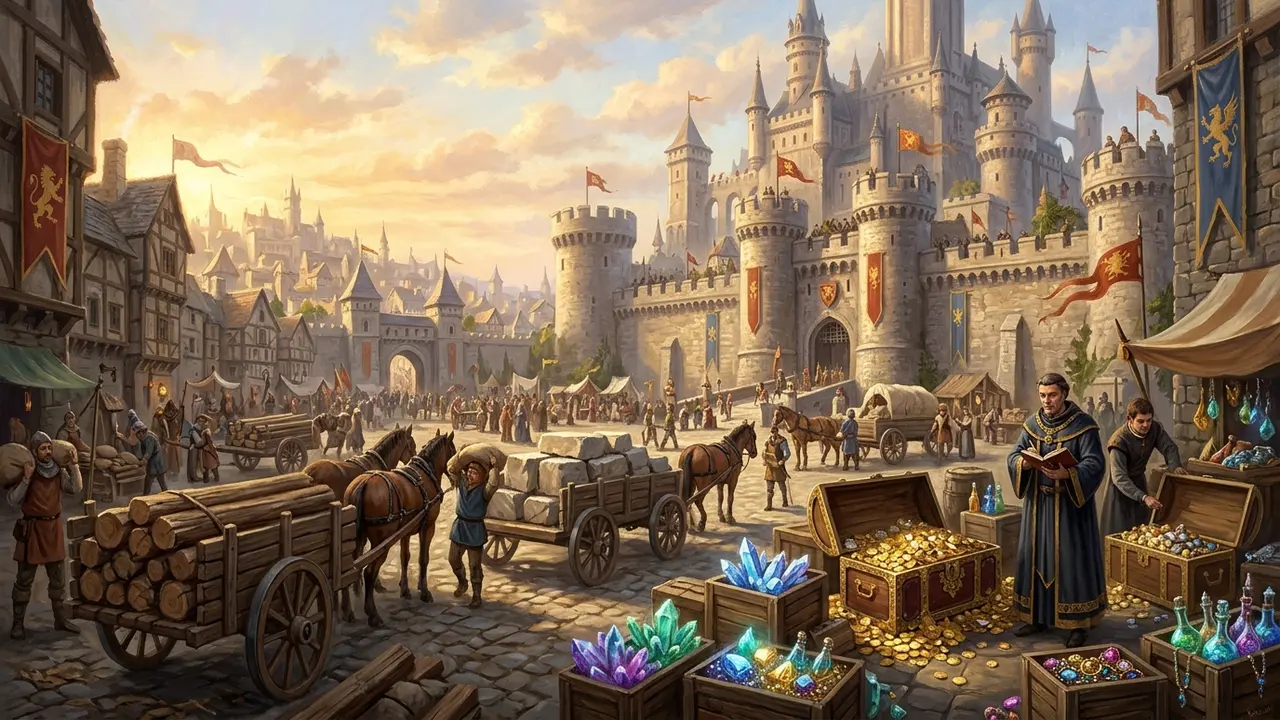
Balance daily gold revenues, sawmill and ore mine acquisitions, treasure chest choices, and trading in Heroes of Might and Magic: Olden Era.
Primary Infrastructure Materials and Mine Flagging
Common wood and ore fund town structures, while precious crystals, gems, sulfur, and mercury unlock advanced creature dwellings and spell research. Flagging sawmills and ore pits during your first three days establishes steady daily revenue, preventing structural construction stalls — our beginner tips guide details vital early-turn habits and scouting shortcuts.
Treasure Chest Strategy: Gold Versus Experience
Opening adventure treasure chests presents a recurring choice: claim immediate gold or grant experience to the discovering hero. While leveling heroes strengthens military stats, taking experience constantly drains the treasury. During week one and following the capture of secondary towns, selecting gold provides the capital needed to construct income-generating town halls and essential creature dwellings.

Treasury Preservation and Selective Unit Recruitment
A frequent strategic pitfall is spending all available gold purchasing every recruited unit each week. Unchecked recruitment empties the treasury, leaving zero capital to build advanced prerequisites like the Labyrinth or Mage Guild. Budgeting gold allows players to recruit only essential clearing troops while saving for decisive high-tier creature spikes — the best units tier list helps identify which low-tier and core stacks justify immediate recruitment.
Overland Logistics and Hero Movement Economics
Hiring a secondary hero from the tavern on day one establishes logistical efficiency: the secondary scout picks up loose caches and operates supply chains, leaving the main carry hero free to defeat guarding monsters and claim valuable mines.

Marketplace Trading and Rare Material Exchange
When rare resources run short, marketplaces permit trading surplus materials to cover construction deficits. However, market exchange rates can be steep in early game stages. Prioritizing direct mine captures and scouting for alchemical labs yields far higher returns than relying on market trades to fund advanced dwellings — see our how to play guide for a complete overview of town infrastructure and adventure map flow.
Step-by-Step Walkthrough
- Locate and flag local wood sawmills and ore pits within your first three days.
- Choose gold over experience in early treasure chests to fund town hall expansions.
- Recruit only essential clearing troops to preserve gold for high-tier building prerequisites.
- Hire a secondary hero on day one to collect loose resource piles across the map.
- Trade surplus common materials at the marketplace when rare gems or sulfur run low.

Sources
- Heroes of Might and Magic: Olden Era Beginners Guide! Tips You Need to Know (Norovo)
- Advanced Early Game Strategy Guide For HEROES OF MIGHT AND MAGIC OLDEN ERA (Ic0n Gaming)
- Tips For A Strong Early Game Start In HEROES OF MIGHT AND MAGIC OLDEN ERA (Ic0n Gaming)
- 5 Mistakes to Avoid in Heroes of Might & Magic: Olden Era (Tenkiei)
- HoMM: Olden Era - 12 Beginner Tips Under 200 Seconds (Just Press Play)
- Heroes Olden Era Tips You Need to Know | Beginner Guide HOMM (NoChatBot)